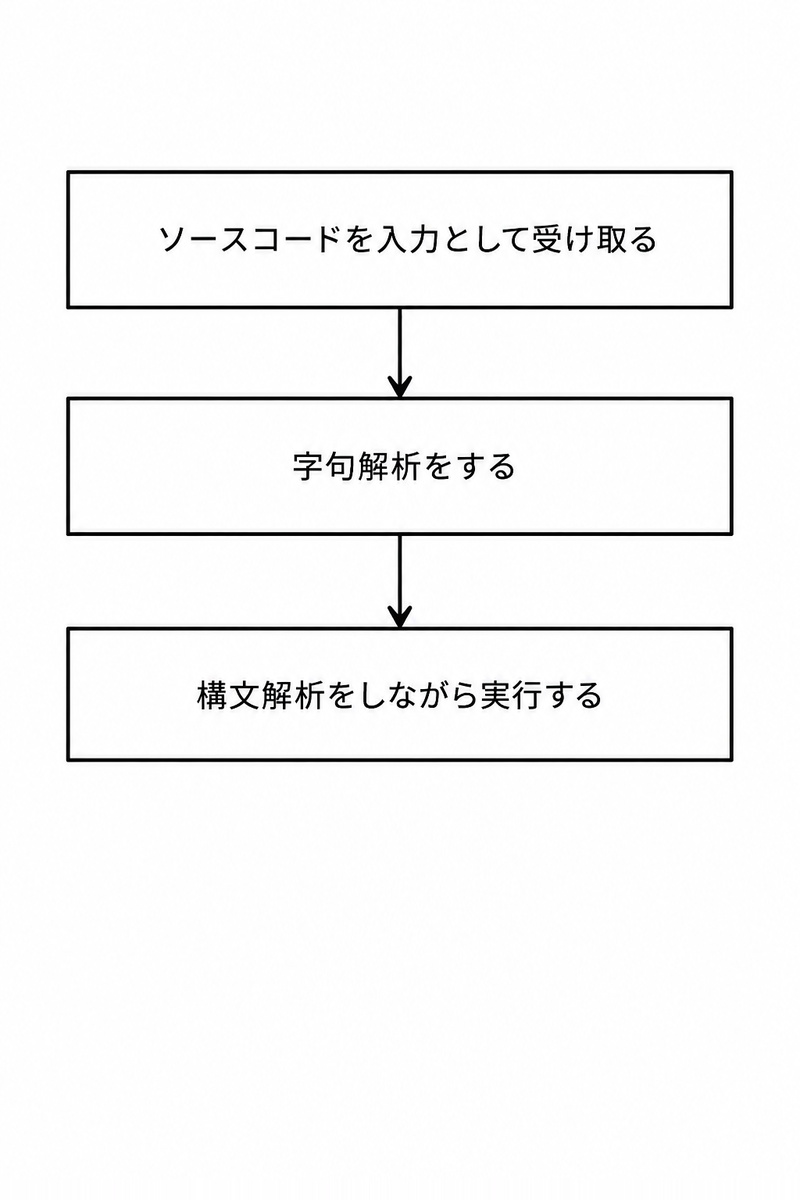
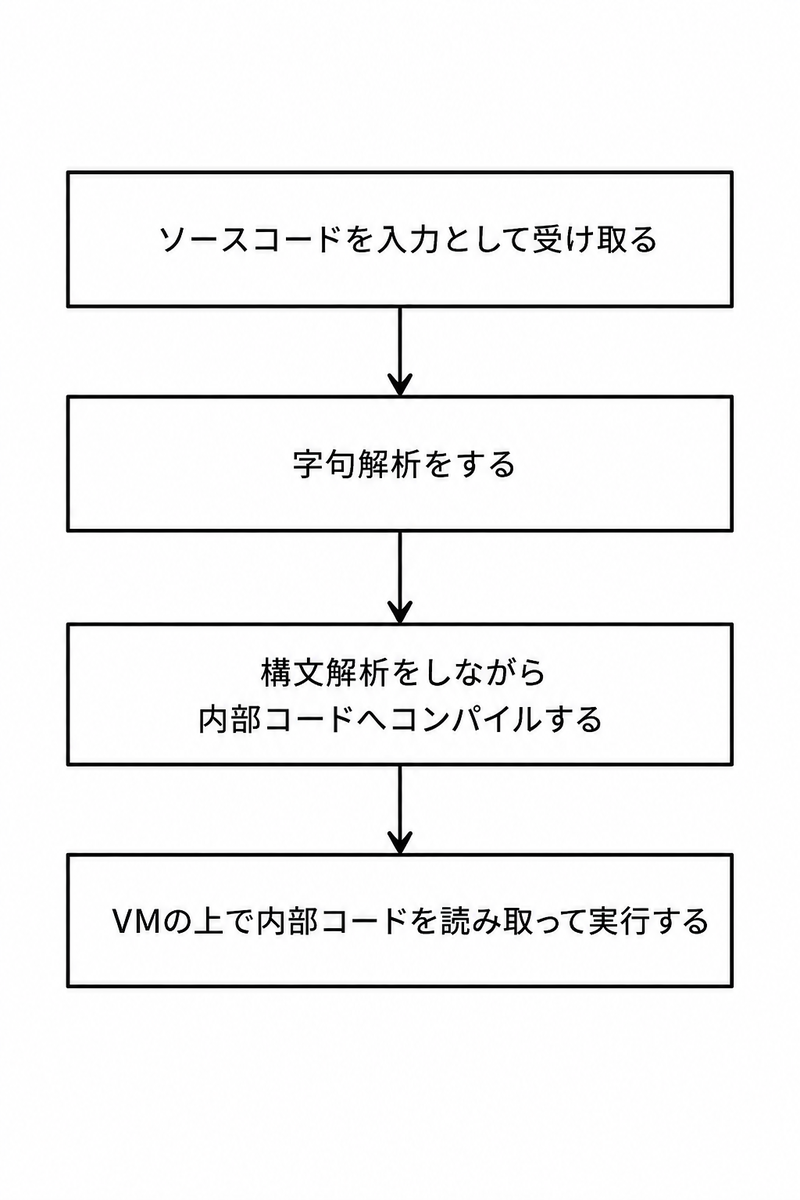
hariboteは、はりぼて言語の処理系です。
はりぼて言語は、川合秀実さんが開発しているプログラミング言語です。2021年に「10日くらいでできる!プログラミング言語自作入門」 で発表されました。
gitを使わなくてもhariboteのhistブランチ (Commits on Jul 7, 2026)のソースコードが利用できるように、ここに置いておきます。
haribote HL-8c
haribote HL-8cは、ifやforなどの制御構文と配列や文字列リテラルをサポートしています。
ソースコードをコピーする
他のバージョンのソースコードを読む
if文のサポート
参考: ifgoto()の仕組みについて
for文のサポート
初期化とループの最後に評価される更新を、丸括弧内に書けないfor文を追加(ed85c8b )
continue文とbreak文をサポート(2445810 )
初期化とループの最後に評価される更新をサポート(eb94a2e )
明示的な無限ループをサポート(07c7676 )
特定のトークンの並びがきたときにCISC的な内部命令を生成するループの最適化を追加(7834fe3 )
for文の実装が分かれば、while文の実装も分かると思います(2da9c49 )。
処理系の改造
公式処理系の構造をベースに処理系を改造する際は、上で示したコミットとHL-7で示した論理否定演算子を追加するコミット(525c1e4 )が参考になると思います。
haribote HL-8cを前提とすると、次の順で改造すると理解しやすいのではないかと考えています。
デクリメント演算子の追加
中置演算子の追加
複合代入演算子の追加
残された課題 への挑戦
まずintだけではなくdoubleも使えるようにする(参考: a22_txt03 )。
引数なしの関数を作って呼び出せるようにする(参考: a22_txt03_2 )。
ローカル変数に対応する。
引数ありの関数を作って呼び出せるようにする。
構造体なども使えるようにする。
処理系のどこで何をしているかを確認することが目的なので、すべての演算子を追加する必要はないでしょう。
もし余力があれば残された課題へ挑戦する前後で、else ifなどもサポートしてみるとたのしいと思います。
else ifのサポート
条件演算子の追加
ソースコードをコピーする
他のバージョンのソースコードを読む
#include <stdio.h>
#include <stdlib.h>
#include <stdint.h>
#include <string.h>
#include <time.h>
#include <assert.h>
#if defined(__APPLE__) || defined(__linux__)
#include <unistd.h>
#include <termios.h>
#endif
typedef unsigned char *String;
int loadText (String path, String text, int size)
{
unsigned char buf[1000 ];
int startPos = path[0 ] == '"' ;
int i = 0 ;
while (path[startPos + i] != 0 && path[startPos + i] != '"' ) {
buf[i] = path[startPos + i];
++i;
}
buf[i] = 0 ;
FILE *fp = fopen (buf, "rt" );
if (fp == NULL ) {
printf ("Failed to open %s\n " , path);
return 1 ;
}
int nItems = fread (text, 1 , size - 1 , fp);
fclose (fp);
text[nItems] = 0 ;
return 0 ;
}
#define MAX_TOKEN_CODE 1000
String tokenStrs[MAX_TOKEN_CODE + 1 ];
int tokenLens[MAX_TOKEN_CODE + 1 ];
intptr_t vars[MAX_TOKEN_CODE + 1 ];
int getTokenCode (String str, int len)
{
static unsigned char tokenBuf[(MAX_TOKEN_CODE + 1 ) * 10 ];
static int nTokens = 0 , unusedHead = 0 ;
int i;
for (i = 0 ; i < nTokens; ++i) {
if (len == tokenLens[i] && strncmp (str, tokenStrs[i], len) == 0 )
break ;
}
if (i == nTokens) {
if (nTokens >= MAX_TOKEN_CODE) {
printf ("Too many tokens \n " );
exit (1 );
}
strncpy (&tokenBuf[ unusedHead ], str, len);
tokenBuf[ unusedHead + len ] = 0 ;
tokenStrs[i] = &tokenBuf[ unusedHead ];
tokenLens[i] = len;
unusedHead += len + 1 ;
++nTokens;
vars[i] = strtol (tokenStrs[i], NULL , 0 );
if (tokenStrs[i][0 ] == '"' ) {
char *p = malloc (len - 1 );
if (p == NULL ) {
printf ("Failed to allocate memory \n " );
exit (1 );
}
vars[i] = (intptr_t ) p;
memcpy (p, tokenStrs[i] + 1 , len - 2 );
p[len - 2 ] = 0 ;
}
}
return i;
}
inline static int isAlphabet (unsigned char ch)
{
return ('a' <= ch && ch <= 'z' ) || ('A' <= ch && ch <= 'Z' ) || ch == '_' ;
}
inline static int isNumber (unsigned char ch)
{
return '0' <= ch && ch <= '9' ;
}
int lexer (String str, int *tc)
{
int pos = 0 , nTokens = 0 ;
int len;
for (;;) {
while (str[pos] == ' ' || str[pos] == '\t' || str[pos] == '\n' || str[pos] == '\r' )
++pos;
if (str[pos] == 0 )
return nTokens;
len = 0 ;
if (strchr ("(){}[];," , str[pos]) != NULL )
len = 1 ;
else if (isAlphabet (str[pos]) || isNumber (str[pos])) {
while (isAlphabet (str[pos + len]) || isNumber (str[pos + len]))
++len;
}
else if (strchr ("=+-*/!%&~|<>?:.#" , str[pos]) != NULL ) {
while (strchr ("=+-*/!%&~|<>?:.#" , str[pos + len]) != NULL && str[pos + len] != 0 )
++len;
}
else if (str[pos] == '"' ) {
len = 1 ;
while (str[pos + len] != str[pos] && str[pos + len] >= ' ' )
++len;
if (str[pos + len] == str[pos])
++len;
}
else {
printf ("Lexing error: %.10s\n " , &str[pos]);
exit (1 );
}
tc[nTokens] = getTokenCode (&str[pos], len);
pos += len;
++nTokens;
}
}
int tc[10000 ];
enum {
PlusPlus,
Equal,
NotEq,
Les,
GtrEq,
LesEq,
Gtr,
Plus,
Minus,
Multi,
Divi,
Mod,
And,
ShiftRight,
Assign,
Ex,
Lparen,
Rparen,
Lbracket,
Rbracket,
Lbrace,
Rbrace,
Period,
Comma,
Semicolon,
Colon,
Print,
Time,
Goto,
If,
Else,
For,
While,
Continue,
Break,
Prints,
Wildcard,
Expr,
Expr0,
Zero,
One,
Two,
Three,
Four,
Five,
Six,
Seven,
Eight,
Nine,
Tmp0,
Tmp1,
Tmp2,
Tmp3,
Tmp4,
Tmp5,
Tmp6,
Tmp7,
Tmp8,
Tmp9,
EndOfKeys
};
String defaultTokens[] = {
"++" ,
"==" ,
"!=" ,
"<" ,
">=" ,
"<=" ,
">" ,
"+" ,
"-" ,
"*" ,
"/" ,
"%" ,
"&" ,
">>" ,
"=" ,
"!" ,
"(" ,
")" ,
"[" ,
"]" ,
"{" ,
"}" ,
"." ,
"," ,
";" ,
":" ,
"print" ,
"time" ,
"goto" ,
"if" ,
"else" ,
"for" ,
"while" ,
"continue" ,
"break" ,
"prints" ,
"!!*" ,
"!!**" ,
"!!***" ,
"0" ,
"1" ,
"2" ,
"3" ,
"4" ,
"5" ,
"6" ,
"7" ,
"8" ,
"9" ,
"_t0" ,
"_t1" ,
"_t2" ,
"_t3" ,
"_t4" ,
"_t5" ,
"_t6" ,
"_t7" ,
"_t8" ,
"_t9" ,
};
void initTc (String *defaultTokens, int len)
{
assert (len == EndOfKeys);
for (int i = 0 ; i < len; ++i)
tc[i] = getTokenCode (defaultTokens[i], strlen (defaultTokens[i]));
}
typedef enum {
Prefix_PlusPlus = 2 ,
Prefix_Minus = 2 ,
Prefix_Ex = 2 ,
Infix_Multi = 4 ,
Infix_Divi = 4 ,
Infix_Mod = 4 ,
Infix_Plus = 5 ,
Infix_Minus = 5 ,
Infix_ShiftRight = 6 ,
Infix_LesEq = 7 ,
Infix_GtrEq = 7 ,
Infix_Les = 7 ,
Infix_Gtr = 7 ,
Infix_Equal = 8 ,
Infix_NotEq = 8 ,
Infix_And = 9 ,
Infix_Assign = 15 ,
LowestPrecedence = 99 ,
NoPrecedence = 100
} Precedence;
Precedence precedenceTable[][2 ] = {
[PlusPlus] = {NoPrecedence, Prefix_PlusPlus},
[Equal] = {Infix_Equal, NoPrecedence},
[NotEq] = {Infix_NotEq, NoPrecedence},
[LesEq] = {Infix_LesEq, NoPrecedence},
[GtrEq] = {Infix_GtrEq, NoPrecedence},
[Les] = {Infix_Les, NoPrecedence},
[Gtr] = {Infix_Gtr, NoPrecedence},
[Plus] = {Infix_Plus, NoPrecedence},
[Minus] = {Infix_Minus, Prefix_Minus},
[Multi] = {Infix_Multi, NoPrecedence},
[Divi] = {Infix_Divi, NoPrecedence},
[Mod] = {Infix_Mod, NoPrecedence},
[And] = {Infix_And, NoPrecedence},
[ShiftRight] = {Infix_ShiftRight, NoPrecedence},
[Assign] = {Infix_Assign, NoPrecedence},
[Ex] = {NoPrecedence, Prefix_Ex},
};
enum { Infix, Prefix, EndOfStyles };
inline static Precedence getPrecedence (int style, int operator)
{
assert (0 <= style && style < EndOfStyles);
return 0 <= operator && operator <= Assign
? precedenceTable[operator][style]
: NoPrecedence;
}
#define MAX_PHRASE_LEN 31
#define N_WILDCARDS 10
int phraseTc[(MAX_PHRASE_LEN + 1 ) * 100 ];
int wpc[N_WILDCARDS * 2 ];
int nextPc;
inline static int End_ (int num)
{
return N_WILDCARDS + num;
}
int match (int id, String phrase, int pc)
{
int head = id * (MAX_PHRASE_LEN + 1 ), phraseLen;
if (phraseTc[head + MAX_PHRASE_LEN] == 0 ) {
phraseLen = lexer (phrase, &phraseTc[head]);
assert (phraseLen <= MAX_PHRASE_LEN);
phraseTc[head + MAX_PHRASE_LEN] = phraseLen;
}
phraseLen = phraseTc[head + MAX_PHRASE_LEN];
for (int pos = 0 ; pos < phraseLen; ++pos) {
int phraTc = phraseTc[head + pos];
if (phraTc == Wildcard || phraTc == Expr || phraTc == Expr0) {
++pos;
int num = phraseTc[head + pos] - Zero;
wpc[num] = pc;
if (phraTc == Wildcard) {
++pc;
continue ;
}
int depth = 0 ;
for (;;) {
if (tc[pc] == Semicolon)
break ;
if (tc[pc] == Comma && depth == 0 )
break ;
if (tc[pc] == Lparen || tc[pc] == Lbracket)
++depth;
if (tc[pc] == Rparen || tc[pc] == Rbracket)
--depth;
if (depth < 0 )
break ;
++pc;
}
wpc[End_ (num)] = pc;
if (phraTc == Expr && wpc[num] == pc)
return 0 ;
if (depth > 0 )
return 0 ;
continue ;
}
if (phraTc != tc[pc])
return 0 ;
++pc;
}
nextPc = pc;
return 1 ;
}
typedef intptr_t *IntPtr;
IntPtr internalCode[10000 ];
IntPtr *icp;
typedef enum {
OpEnd,
OpCpy,
OpCeq,
OpCne,
OpClt,
OpCge,
OpCle,
OpCgt,
OpAdd,
OpSub,
OpMul,
OpDiv,
OpMod,
OpBand,
OpShr,
OpAdd1,
OpNot,
OpNeg,
OpGoto,
OpJeq,
OpJne,
OpJlt,
OpJge,
OpJle,
OpJgt,
OpLop,
OpPrint,
OpTime,
OpPrints,
OpAryNew,
OpAryInit,
OpAryGet,
OpArySet,
OpPrm,
} Opcode;
void putIc (Opcode op, IntPtr p1, IntPtr p2, IntPtr p3, IntPtr p4)
{
icp[0 ] = (IntPtr) op;
icp[1 ] = p1;
icp[2 ] = p2;
icp[3 ] = p3;
icp[4 ] = p4;
icp += 5 ;
}
#define N_TMPS 10
char tmpFlags[N_TMPS];
int tmpAlloc ()
{
int i = 0 ;
while (tmpFlags[i] != 0 ) {
assert (i < N_TMPS);
++i;
}
tmpFlags[i] = 1 ;
return Tmp0 + i;
}
void tmpFree (int i)
{
if (Tmp0 <= i && i <= Tmp9)
tmpFlags[i - Tmp0] = 0 ;
}
int epc, epcEnd;
int evalExpression (Precedence precedence);
int expression (int num);
inline static Opcode getOpcode (int i)
{
assert (Equal <= i && i < Assign);
return OpCeq + i - Equal;
}
int evalInfixExpression (int lhs, Precedence precedence, int op)
{
++epc;
int rhs = evalExpression (precedence);
int res = tmpAlloc ();
putIc (getOpcode (op), &vars[res], &vars[lhs], &vars[rhs], 0 );
tmpFree (lhs);
tmpFree (rhs);
if (lhs < 0 || rhs < 0 )
return -1 ;
return res;
}
int evalExpression (Precedence precedence)
{
int res = -1 , e0 = 0 , e1 = 0 , e2 = 0 ;
nextPc = 0 ;
if (match (99 , "( !!**0 )" , epc)) {
res = expression (0 );
}
else if (match (72 , "!!*0!!*1[!!**2]" , epc) && tc[wpc[0 ]] == PlusPlus) {
e2 = expression (2 );
res = tmpAlloc ();
putIc (OpAryGet, &vars[tc[wpc[1 ]]], &vars[e2], &vars[res], 0 );
putIc (OpAdd1, &vars[res], 0 , 0 , 0 );
putIc (OpArySet, &vars[tc[wpc[1 ]]], &vars[e2], &vars[res], 0 );
}
else if (tc[epc] == PlusPlus) {
++epc;
res = evalExpression (getPrecedence (Prefix, PlusPlus));
putIc (OpAdd1, &vars[res], 0 , 0 , 0 );
}
else if (tc[epc] == Minus) {
++epc;
e0 = evalExpression (getPrecedence (Prefix, Minus));
res = tmpAlloc ();
putIc (OpNeg, &vars[res], &vars[e0], 0 , 0 );
}
else if (tc[epc] == Ex) {
++epc;
e0 = evalExpression (getPrecedence (Prefix, Ex));
res = tmpAlloc ();
putIc (OpNot, &vars[res], &vars[e0], 0 , 0 );
}
else {
res = tc[epc];
++epc;
}
if (nextPc > 0 )
epc = nextPc;
for (;;) {
tmpFree (e0);
tmpFree (e1);
tmpFree (e2);
if (res < 0 || e0 < 0 || e1 < 0 || e2 < 0 )
return -1 ;
if (epc >= epcEnd)
break ;
Precedence encountered;
e0 = 0 , e1 = 0 , e2 = 0 ;
if (tc[epc] == PlusPlus) {
++epc;
e0 = res;
res = tmpAlloc ();
putIc (OpCpy, &vars[res], &vars[e0], 0 , 0 );
putIc (OpAdd1, &vars[e0], 0 , 0 , 0 );
}
else if (match (73 , "[!!**0]!!*1" , epc) && tc[wpc[1 ]] == PlusPlus) {
e1 = res;
res = tmpAlloc ();
e0 = expression (0 );
epc = nextPc;
putIc (OpAryGet, &vars[e1], &vars[e0], &vars[res], 0 );
e2 = tmpAlloc ();
putIc (OpAdd, &vars[e2], &vars[res], &vars[One], 0 );
putIc (OpArySet, &vars[e1], &vars[e0], &vars[e2], 0 );
}
else if (match (70 , "[!!**0]=" , epc)) {
e1 = res;
e0 = expression (0 );
epc = nextPc;
res = evalExpression (getPrecedence (Infix, Assign));
putIc (OpArySet, &vars[e1], &vars[e0], &vars[res], 0 );
}
else if (match (71 , "[!!**0]" , epc)) {
e1 = res;
res = tmpAlloc ();
e0 = expression (0 );
putIc (OpAryGet, &vars[e1], &vars[e0], &vars[res], 0 );
epc = nextPc;
}
else if (precedence >= (encountered = getPrecedence (Infix, tc[epc]))) {
switch (tc[epc]) {
case Multi: case Divi: case Mod:
case Plus: case Minus:
case ShiftRight:
case Les: case LesEq: case Gtr: case GtrEq:
case Equal: case NotEq:
case And:
res = evalInfixExpression (res, encountered - 1 , tc[epc]);
break ;
case Assign:
++epc;
e0 = evalExpression (encountered);
putIc (OpCpy, &vars[res], &vars[e0], 0 , 0 );
break ;
}
}
else
break ;
}
return res;
}
int expression (int num)
{
if (wpc[num] == wpc[End_ (num)])
return 0 ;
int i, end = N_WILDCARDS * 2 , buf[end + 1 ];
for (i = 0 ; i < end; ++i)
buf[i] = wpc[i];
buf[i] = nextPc;
int oldEpc = epc, oldEpcEnd = epcEnd;
epc = wpc[num]; epcEnd = wpc[End_ (num)];
int res = evalExpression (LowestPrecedence);
if (epc < epcEnd)
return -1 ;
for (i = 0 ; i < end; ++i)
wpc[i] = buf[i];
nextPc = buf[i];
epc = oldEpc; epcEnd = oldEpcEnd;
return res;
}
enum { ConditionIsTrue, ConditionIsFalse };
void ifgoto (int i, int not , int label)
{
int begin = wpc[i];
if (begin + 3 == wpc[End_ (i)] && Equal <= tc[begin + 1 ] && tc[begin + 1 ] <= Gtr) {
Opcode op = OpJeq + ((tc[begin + 1 ] - Equal) ^ not );
putIc (op, &vars[label], &vars[tc[begin]], &vars[tc[begin + 2 ]], 0 );
}
else {
i = expression (i);
putIc (OpJne - not , &vars[label], &vars[i], &vars[Zero], 0 );
tmpFree (i);
}
}
int tmpLabelNo;
int tmpLabelAlloc ()
{
char str[10 ];
sprintf (str, "_l %d " , tmpLabelNo);
++tmpLabelNo;
return getTokenCode (str, strlen (str));
}
#define BLOCK_INFO_SIZE 10
int blockInfo[BLOCK_INFO_SIZE * 100 ], blockDepth, loopDepth;
enum { BlockType, IfBlock, ForBlock, WhileBlock };
enum { IfLabel0 = 1 , IfLabel1 };
enum { LoopBegin = 1 , LoopContinue, LoopBreak, LoopDepth, LoopWpc1, LoopWpcEnd1, LoopWpc2, LoopWpcEnd2 };
inline static int *initBlockInfo ()
{
blockDepth = loopDepth = 0 ;
return blockInfo;
}
inline static int *beginBlock ()
{
blockDepth += BLOCK_INFO_SIZE;
return &blockInfo[blockDepth];
}
inline static int *endBlock ()
{
blockDepth -= BLOCK_INFO_SIZE;
return &blockInfo[blockDepth];
}
inline static void startLoop (int **loopBlock)
{
blockInfo[blockDepth + LoopDepth] = loopDepth;
loopDepth = blockDepth;
*loopBlock = &blockInfo[loopDepth];
}
inline static void stopLoop (int **loopBlock)
{
loopDepth = blockInfo[blockDepth + LoopDepth];
*loopBlock = loopDepth == 0 ? NULL : &blockInfo[loopDepth];
}
inline static void saveExpr (int i)
{
int type = blockInfo[blockDepth + BlockType], head;
#if defined( NDEBUG )
head = LoopWpc1 - 2 ;
#else
if (type == ForBlock && (i == 1 || i == 2 ))
head = LoopWpc1 - 2 ;
else if (type == WhileBlock && i == 1 )
head = LoopWpc1 - 2 ;
else {
printf (" %s : %s : %d : " , __FILE__ , __FUNCTION__, __LINE__ );
printf ("Not implemented error: BlockType= %d (i= %d ) is not availavle \n " , type, i);
exit (1 );
}
#endif
blockInfo[blockDepth + head + 2 * i] = wpc[i];
blockInfo[blockDepth + head + 2 * i + 1 ] = wpc[End_ (i)];
}
inline static void restoreExpr (int i)
{
int type = blockInfo[blockDepth + BlockType], head;
#if defined( NDEBUG )
head = LoopWpc1 - 2 ;
#else
if (type == ForBlock && (i == 1 || i == 2 ))
head = LoopWpc1 - 2 ;
else if (type == WhileBlock && i == 1 )
head = LoopWpc1 - 2 ;
else {
printf (" %s : %s : %d : " , __FILE__ , __FUNCTION__, __LINE__ );
printf ("Not implemented error: BlockType= %d (i= %d ) is not availavle \n " , type, i);
exit (1 );
}
#endif
wpc[i] = blockInfo[blockDepth + head + 2 * i];
wpc[End_ (i)] = blockInfo[blockDepth + head + 2 * i + 1 ];
}
int exprsPutIc (int times, Opcode op, int tmpReg, int *err)
{
assert (tmpReg >= 0 );
int hasTmpAlloced = tmpReg != 0 , e[8 ] = {0 };
if (hasTmpAlloced)
e[0 ] = tmpReg;
for (int i = hasTmpAlloced; i < times; ++i)
e[i] = expression (i);
putIc (op, &vars[e[0 ]], &vars[e[1 ]], &vars[e[2 ]], &vars[e[3 ]]);
if (times > 4 )
putIc (OpPrm, &vars[e[4 ]], &vars[e[5 ]], &vars[e[6 ]], &vars[e[7 ]]);
for (int i = hasTmpAlloced; i < times; ++i) {
if (e[i] < 0 )
*err = -1 ;
tmpFree (e[i]);
}
return tmpReg;
}
int compile (String src)
{
int nTokens = lexer (src, tc);
tc[nTokens++] = Semicolon;
tc[nTokens] = tc[nTokens + 1 ] = tc[nTokens + 2 ] = tc[nTokens + 3 ] = Period;
icp = internalCode;
for (int i = 0 ; i < N_TMPS; ++i)
tmpFlags[i] = 0 ;
tmpLabelNo = 0 ;
int *curBlock = initBlockInfo (), *loopBlock = NULL ;
int pc;
for (pc = 0 ; pc < nTokens;) {
int e0 = 0 , e2 = 0 ;
if (match (0 , "!!*0 = !!*1;" , pc)) {
putIc (OpCpy, &vars[tc[wpc[0 ]]], &vars[tc[wpc[1 ]]], 0 , 0 );
}
else if (match (10 , "!!*0 = !!*1 + 1; if (!!*2 < !!*3) goto !!*4;" , pc) && tc[wpc[0 ]] == tc[wpc[1 ]] && tc[wpc[0 ]] == tc[wpc[2 ]]) {
putIc (OpLop, &vars[tc[wpc[4 ]]], &vars[tc[wpc[0 ]]], &vars[tc[wpc[3 ]]], 0 );
}
else if (match (9 , "!!*0 = !!*1 + 1;" , pc) && tc[wpc[0 ]] == tc[wpc[1 ]]) {
putIc (OpAdd1, &vars[tc[wpc[0 ]]], 0 , 0 , 0 );
}
else if (match (1 , "!!*0 = !!*1 !!*2 !!*3;" , pc) && Equal <= tc[wpc[2 ]] && tc[wpc[2 ]] < Assign) {
putIc (OpCeq + tc[wpc[2 ]] - Equal, &vars[tc[wpc[0 ]]], &vars[tc[wpc[1 ]]], &vars[tc[wpc[3 ]]], 0 );
}
else if (match (3 , "print !!**0;" , pc)) {
exprsPutIc (1 , OpPrint, 0 , &e0);
}
else if (match (4 , "!!*0:" , pc)) {
vars[tc[wpc[0 ]]] = icp - internalCode;
}
else if (match (5 , "goto !!*0;" , pc)) {
putIc (OpGoto, &vars[tc[wpc[0 ]]], &vars[tc[wpc[0 ]]], 0 , 0 );
}
else if (match (6 , "if (!!**0) goto !!*1;" , pc)) {
ifgoto (0 , ConditionIsTrue, tc[wpc[1 ]]);
}
else if (match (7 , "time;" , pc)) {
putIc (OpTime, 0 , 0 , 0 , 0 );
}
else if (match (11 , "if (!!**0) {" , pc)) {
curBlock = beginBlock ();
curBlock[ BlockType ] = IfBlock;
curBlock[ IfLabel0 ] = tmpLabelAlloc ();
curBlock[ IfLabel1 ] = 0 ;
ifgoto (0 , ConditionIsFalse, curBlock[IfLabel0]);
}
else if (match (13 , "} else {" , pc) && curBlock[BlockType] == IfBlock) {
curBlock[IfLabel1] = tmpLabelAlloc ();
putIc (OpGoto, &vars[curBlock[IfLabel1]], &vars[curBlock[IfLabel1]], 0 , 0 );
vars[curBlock[IfLabel0]] = icp - internalCode;
}
else if (match (12 , "}" , pc) && curBlock[BlockType] == IfBlock) {
int ifLabel = curBlock[IfLabel1] ? IfLabel1 : IfLabel0;
vars[curBlock[ifLabel]] = icp - internalCode;
curBlock = endBlock ();
}
else if (match (14 , "for (!!***0; !!***1; !!***2) {" , pc)) {
curBlock = beginBlock ();
curBlock[ BlockType ] = ForBlock;
curBlock[ LoopBegin ] = tmpLabelAlloc ();
curBlock[ LoopContinue ] = tmpLabelAlloc ();
curBlock[ LoopBreak ] = tmpLabelAlloc ();
startLoop (&loopBlock);
e0 = expression (0 );
saveExpr (1 );
if (wpc[1 ] < wpc[End_ (1 )])
ifgoto (1 , ConditionIsFalse, curBlock[LoopBreak]);
saveExpr (2 );
vars[curBlock[LoopBegin]] = icp - internalCode;
}
else if (match (12 , "}" , pc) && curBlock[BlockType] == ForBlock) {
vars[curBlock[LoopContinue]] = icp - internalCode;
restoreExpr (1 );
restoreExpr (2 );
int begin1 = wpc[1 ], end1 = wpc[End_ (1 )], begin2 = wpc[2 ], end2 = wpc[End_ (2 )];
int shouldOptimize =
begin1 + 3 == end1 && tc[begin1 + 1 ] == Les && begin2 + 2 == end2 &&
(tc[begin1] == tc[begin2] && tc[begin2 + 1 ] == PlusPlus ||
tc[begin1] == tc[begin2 + 1 ] && tc[begin2] == PlusPlus);
if (shouldOptimize)
putIc (OpLop, &vars[curBlock[LoopBegin]], &vars[tc[begin1]], &vars[tc[begin1 + 2 ]], 0 );
else {
e2 = expression (2 );
if (begin1 < end1)
ifgoto (1 , ConditionIsTrue, curBlock[LoopBegin]);
else
putIc (OpGoto, &vars[curBlock[LoopBegin]], &vars[curBlock[LoopBegin]], 0 , 0 );
}
vars[curBlock[LoopBreak]] = icp - internalCode;
stopLoop (&loopBlock);
curBlock = endBlock ();
}
else if (match (22 , "while (!!**1) {" , pc)) {
curBlock = beginBlock ();
curBlock[ BlockType ] = WhileBlock;
curBlock[ LoopBegin ] = tmpLabelAlloc ();
curBlock[ LoopContinue ] = tmpLabelAlloc ();
curBlock[ LoopBreak ] = tmpLabelAlloc ();
startLoop (&loopBlock);
saveExpr (1 );
ifgoto (1 , ConditionIsFalse, curBlock[LoopBreak]);
vars[curBlock[LoopBegin]] = icp - internalCode;
}
else if (match (12 , "}" , pc) && curBlock[BlockType] == WhileBlock) {
vars[curBlock[LoopContinue]] = icp - internalCode;
restoreExpr (1 );
ifgoto (1 , ConditionIsTrue, curBlock[LoopBegin]);
vars[curBlock[LoopBreak]] = icp - internalCode;
stopLoop (&loopBlock);
curBlock = endBlock ();
}
else if (match (15 , "continue;" , pc) && loopBlock) {
putIc (OpGoto, &vars[loopBlock[LoopContinue]], &vars[loopBlock[LoopContinue]], 0 , 0 );
}
else if (match (16 , "break;" , pc) && loopBlock) {
putIc (OpGoto, &vars[loopBlock[LoopBreak]], &vars[loopBlock[LoopBreak]], 0 , 0 );
}
else if (match (17 , "if (!!**0) continue;" , pc) && loopBlock) {
ifgoto (0 , ConditionIsTrue, loopBlock[LoopContinue]);
}
else if (match (18 , "if (!!**0) break;" , pc) && loopBlock) {
ifgoto (0 , ConditionIsTrue, loopBlock[LoopBreak]);
}
else if (match (19 , "prints !!**0;" , pc)) {
exprsPutIc (1 , OpPrints, 0 , &e0);
}
else if (match (20 , "int !!*0[!!**2];" , pc)) {
e2 = expression (2 );
putIc (OpAryNew, &vars[tc[wpc[0 ]]], &vars[e2], 0 , 0 );
}
else if (match (21 , "int !!*0[!!**2] = {" , pc)) {
e2 = expression (2 );
putIc (OpAryNew, &vars[tc[wpc[0 ]]], &vars[e2], 0 , 0 );
int pc, nElems = 0 ;
for (pc = nextPc; tc[pc] != Rbrace; ++pc) {
if (pc >= nTokens)
goto err;
if (tc[pc] != Comma)
++nElems;
}
intptr_t *ary = malloc (nElems * sizeof (intptr_t ));
if (ary == NULL ) {
printf ("Failed to allocate memory \n " );
exit (1 );
}
nElems = 0 ;
for (pc = nextPc; tc[pc] != Rbrace; ++pc) {
if (tc[pc] == Comma)
continue ;
ary[nElems] = vars[tc[pc]];
++nElems;
}
putIc (OpAryInit, &vars[tc[wpc[0 ]]], (IntPtr) ary, (IntPtr) nElems, 0 );
nextPc = pc + 2 ;
}
else if (match (8 , "!!***0;" , pc)) {
e0 = expression (0 );
}
else {
goto err;
}
tmpFree (e0);
tmpFree (e2);
if (e0 < 0 || e2 < 0 )
goto err;
pc = nextPc;
}
if (blockDepth > 0 ) {
printf ("Block nesting error: blockDepth= %d loopDepth= %d " , blockDepth, loopDepth);
return -1 ;
}
putIc (OpEnd, 0 , 0 , 0 , 0 );
IntPtr *end = icp, *tmpDest;
Opcode op;
for (icp = internalCode; icp < end; icp += 5 ) {
op = (Opcode) icp[0 ];
if (OpGoto <= op && op <= OpLop) {
tmpDest = internalCode + *icp[1 ];
while ((Opcode) tmpDest[0 ] == OpGoto)
tmpDest = internalCode + *tmpDest[2 ];
icp[1 ] = (IntPtr) tmpDest;
}
}
return end - internalCode;
err :
printf ("Syntax error: %s %s %s %s\n " , tokenStrs[tc[pc]], tokenStrs[tc[pc + 1 ]], tokenStrs[tc[pc + 2 ]], tokenStrs[tc[pc + 3 ]]);
return 1 ;
}
void exec ()
{
clock_t begin = clock ();
icp = internalCode;
intptr_t i, *obj;
for (;;) {
switch ((Opcode) icp[0 ]) {
case OpEnd:
return ;
case OpNeg: *icp[1 ] = -*icp[2 ]; icp += 5 ; continue ;
case OpNot: *icp[1 ] = !*icp[2 ]; icp += 5 ; continue ;
case OpAdd1: ++(*icp[1 ]); icp += 5 ; continue ;
case OpMul: *icp[1 ] = *icp[2 ] * *icp[3 ]; icp += 5 ; continue ;
case OpDiv: *icp[1 ] = *icp[2 ] / *icp[3 ]; icp += 5 ; continue ;
case OpMod: *icp[1 ] = *icp[2 ] % *icp[3 ]; icp += 5 ; continue ;
case OpAdd: *icp[1 ] = *icp[2 ] + *icp[3 ]; icp += 5 ; continue ;
case OpSub: *icp[1 ] = *icp[2 ] - *icp[3 ]; icp += 5 ; continue ;
case OpShr: *icp[1 ] = *icp[2 ] >> *icp[3 ]; icp += 5 ; continue ;
case OpClt: *icp[1 ] = *icp[2 ] < *icp[3 ]; icp += 5 ; continue ;
case OpCle: *icp[1 ] = *icp[2 ] <= *icp[3 ]; icp += 5 ; continue ;
case OpCgt: *icp[1 ] = *icp[2 ] > *icp[3 ]; icp += 5 ; continue ;
case OpCge: *icp[1 ] = *icp[2 ] >= *icp[3 ]; icp += 5 ; continue ;
case OpCeq: *icp[1 ] = *icp[2 ] == *icp[3 ]; icp += 5 ; continue ;
case OpCne: *icp[1 ] = *icp[2 ] != *icp[3 ]; icp += 5 ; continue ;
case OpBand: *icp[1 ] = *icp[2 ] & *icp[3 ]; icp += 5 ; continue ;
case OpCpy: *icp[1 ] = *icp[2 ]; icp += 5 ; continue ;
case OpPrint:
printf (" %d\n " , *icp[1 ]);
icp += 5 ;
continue ;
case OpGoto: icp = (IntPtr *) icp[1 ]; continue ;
case OpJeq: if (*icp[2 ] == *icp[3 ]) { icp = (IntPtr *) icp[1 ]; continue ; } icp += 5 ; continue ;
case OpJne: if (*icp[2 ] != *icp[3 ]) { icp = (IntPtr *) icp[1 ]; continue ; } icp += 5 ; continue ;
case OpJle: if (*icp[2 ] <= *icp[3 ]) { icp = (IntPtr *) icp[1 ]; continue ; } icp += 5 ; continue ;
case OpJge: if (*icp[2 ] >= *icp[3 ]) { icp = (IntPtr *) icp[1 ]; continue ; } icp += 5 ; continue ;
case OpJlt: if (*icp[2 ] < *icp[3 ]) { icp = (IntPtr *) icp[1 ]; continue ; } icp += 5 ; continue ;
case OpJgt: if (*icp[2 ] > *icp[3 ]) { icp = (IntPtr *) icp[1 ]; continue ; } icp += 5 ; continue ;
case OpTime:
printf ("time: %.3f [sec] \n " , (clock () - begin) / (double ) CLOCKS_PER_SEC );
icp += 5 ;
continue ;
case OpLop:
i = *icp[2 ];
++i;
*icp[2 ] = i;
if (i < *icp[3 ]) {
icp = (IntPtr *) icp[1 ];
continue ;
}
icp += 5 ;
continue ;
case OpPrints:
printf (" %s\n " , (char *) *icp[1 ]);
icp += 5 ;
continue ;
case OpAryNew:
*icp[1 ] = (intptr_t ) malloc (*icp[2 ] * sizeof (intptr_t ));
if (*icp[1 ] == (intptr_t ) NULL ) {
printf ("Failed to allocate memory \n " );
exit (1 );
}
memset ((char *) *icp[1 ], 0 , *icp[2 ] * sizeof (intptr_t ));
icp += 5 ;
continue ;
case OpAryInit:
memcpy ((char *) *icp[1 ], (char *) icp[2 ], ((int ) icp[3 ]) * sizeof (intptr_t ));
icp += 5 ;
continue ;
case OpArySet:
obj = (intptr_t *) *icp[1 ];
i = *icp[2 ];
obj[i] = *icp[3 ];
icp += 5 ;
continue ;
case OpAryGet:
obj = (intptr_t *) *icp[1 ];
i = *icp[2 ];
*icp[3 ] = obj[i];
icp += 5 ;
continue ;
case OpPrm:
printf (" %s : %s : %d : " , __FILE__ , __FUNCTION__, __LINE__ );
printf ("Should not reach here \n " );
exit (1 );
}
}
}
int run (String src)
{
if (compile (src) < 0 )
return 1 ;
exec ();
return 0 ;
}
String removeTrailingSemicolon (String str, size_t len) {
for (int i = len - 1 ; i >= 0 ; --i) {
if (str[i] != ';' )
continue ;
str[i] = 0 ;
return &str[i];
}
return NULL ;
}
#if defined(__APPLE__) || defined(__linux__)
struct termios initial_term;
void loadHistory ();
void initTerm ()
{
tcgetattr (0 , &initial_term);
loadHistory ();
}
void saveHistory ();
void destroyTerm ()
{
saveHistory ();
}
inline static void setNonCanonicalMode ()
{
struct termios new_term;
new_term = initial_term;
new_term.c_oflag |= ONOCR;
new_term.c_lflag &= ~(ICANON | ECHO);
new_term.c_cc[VMIN] = 1 ;
new_term.c_cc[VTIME] = 0 ;
tcsetattr (0 , TCSANOW, &new_term);
}
inline static void setCanonicalMode ()
{
tcsetattr (0 , TCSANOW, &initial_term);
}
int cursorX;
inline static void eraseLine ()
{
printf (" \e [2K \r " );
cursorX = 0 ;
}
inline static void eraseAll ()
{
printf (" \e [2J \e [H" );
cursorX = 0 ;
}
#else
void initTerm () {}
void destroyTerm () {}
#endif
#define LINE_SIZE 100
#if defined(__APPLE__) || defined(__linux__)
#define HISTORY_SIZE 100
typedef struct { char str[LINE_SIZE]; int len; } Command;
typedef struct {
Command buf[HISTORY_SIZE];
int head, tail, count, pos;
} CmdHistory;
CmdHistory cmdHist;
void setHistory (char *cmd, int len)
{
if (len == 0 )
return ;
strncpy ((char *) &cmdHist.buf[cmdHist.tail].str, cmd, len);
cmdHist.buf[cmdHist.tail].str[len] = 0 ;
cmdHist.buf[cmdHist.tail].len = len;
if (cmdHist.count < HISTORY_SIZE)
++cmdHist.count;
else
cmdHist.head = (cmdHist.head + 1 ) % HISTORY_SIZE;
cmdHist.tail = (cmdHist.tail + 1 ) % HISTORY_SIZE;
}
enum { Prev, Next };
void showHistory (int dir, char *buf)
{
if (cmdHist.count == 0 )
return ;
if (dir == Prev && cmdHist.pos < cmdHist.count)
++cmdHist.pos;
else if (dir == Prev && cmdHist.pos >= cmdHist.count)
cmdHist.pos = cmdHist.count;
else if (dir == Next && cmdHist.pos > 1 )
--cmdHist.pos;
else if (dir == Next && cmdHist.pos <= 1 ) {
cmdHist.pos = 0 ;
return ;
}
int i = (cmdHist.head + cmdHist.count - cmdHist.pos) % cmdHist.count;
Command *cmd = &cmdHist.buf[i];
printf (" %s " , cmd->str);
strncpy (buf, cmd->str, cmd->len + 1 );
cursorX = cmd->len;
}
void saveHistory ()
{
FILE *fp;
if (cmdHist.count > 0 && (fp = fopen (".haribote_history" , "wt" )) == NULL )
return ;
int counter = cmdHist.count;
while (counter > 0 ) {
int i = (cmdHist.head + cmdHist.count - counter) % cmdHist.count;
fprintf (fp, " %s\n " , cmdHist.buf[i].str);
--counter;
}
fclose (fp);
}
void loadHistory ()
{
FILE *fp;
if ((fp = fopen (".haribote_history" , "rt" )) == NULL )
return ;
for (int i = 0 ; i < HISTORY_SIZE; ++i) {
char line[LINE_SIZE];
if (fgets (line, LINE_SIZE, fp) == NULL )
break ;
setHistory (line, strlen (line) - 1 );
}
fclose (fp);
}
char *readLine (char *str, int size, FILE *stream)
{
assert (size > 0 );
setNonCanonicalMode ();
int i = cursorX ? cursorX : 0 , end = size - 1 , ch, nDeleted = 0 , nInserted = 0 ;
char insertBuf[LINE_SIZE + 1 ] = "" ;
while ((i < end) && ((ch = fgetc (stream)) != EOF )) {
if (nInserted > 0 && (ch < 32 || ch == 127 )) {
memmove (&str[cursorX], &str[cursorX - nInserted], insertBuf[LINE_SIZE]);
strncpy (&str[cursorX - nInserted], insertBuf, nInserted);
insertBuf[0 ] = nInserted = 0 ;
}
if (ch == 8 || ch == 127 ) {
if (cursorX == 0 )
continue ;
write (0 , " \e [D \e [K" , 6 );
if (cursorX < i) {
str[i] = 0 ;
printf (" \e 7 %s\e 8" , &str[cursorX + nDeleted]);
}
--cursorX;
++nDeleted;
continue ;
}
else if (nDeleted > 0 ) {
memmove (&str[cursorX], &str[cursorX + nDeleted], i - cursorX - nDeleted);
i -= nDeleted;
str[i] = nDeleted = 0 ;
}
if (ch >= 32 ) {
putchar (ch);
if (cursorX < i) {
if (nInserted == 0 ) {
insertBuf[LINE_SIZE] = i - cursorX;
str[i] = 0 ;
}
printf (" \e 7 %s\e 8" , &str[cursorX - nInserted]);
insertBuf[nInserted] = ch;
++nInserted;
}
else
str[cursorX] = ch;
++cursorX;
++i;
continue ;
}
if (ch == '\n' ) {
putchar (ch);
str[i] = ch; str[i + 1 ] = 0 ;
setHistory (str, i);
cmdHist.pos = 0 ;
cursorX = 0 ;
setCanonicalMode ();
return str;
}
else if (ch == 27 ) {
if ((ch = fgetc (stream)) == EOF )
break ;
else if (ch != 91 ) {
ungetc (ch, stream);
continue ;
}
if ((ch = fgetc (stream)) == EOF )
break ;
switch (ch) {
case 67 : if (cursorX < i) { write (0 , " \e [C" , 3 ); ++cursorX; } continue ;
case 68 : if (cursorX > 0 ) { write (0 , " \e [D" , 3 ); --cursorX; } continue ;
case 65 : strncpy (str, "prevhist" , 9 ); break ;
case 66 : strncpy (str, "nexthist" , 9 ); break ;
}
setCanonicalMode ();
return str;
}
else if (ch == 6 ) {
if (cursorX < i) {
write (0 , " \e [C" , 3 );
++cursorX;
}
}
else if (ch == 2 ) {
if (cursorX > 0 ) {
write (0 , " \e [D" , 3 );
--cursorX;
}
}
else if (ch == 1 ) {
if (cursorX <= 0 )
continue ;
printf (" \e [ %d D" , cursorX);
cursorX = 0 ;
}
else if (ch == 5 ) {
if (cursorX >= i)
continue ;
printf (" \e [ %d C" , i - cursorX);
cursorX = i;
}
else if (ch == 21 ) {
if (cursorX <= 0 )
continue ;
str[i] = 0 ;
printf (" \e [ %d D \e [K \e 7 %s\e 8" , cursorX, &str[cursorX]);
memmove (str, &str[cursorX], i - cursorX);
i -= cursorX;
cursorX = 0 ;
}
else if (ch == 11 ) {
write (0 , " \e [K" , 3 );
str[cursorX] = 0 ;
i -= i - cursorX;
}
else if (ch == 12 ) {
strncpy (str, "clear" , 6 );
setCanonicalMode ();
return str;
}
}
if (nInserted > 0 ) {
memmove (&str[cursorX], &str[cursorX - nInserted], insertBuf[LINE_SIZE]);
strncpy (&str[cursorX - nInserted], insertBuf, nInserted);
}
str[i] = 0 ;
cursorX = 0 ;
setCanonicalMode ();
return NULL ;
}
#else
#define readLine fgets
#endif
int main (int argc, const char **argv)
{
unsigned char text[10000 ];
initTc (defaultTokens, sizeof defaultTokens / sizeof defaultTokens[0 ]);
if (argc >= 2 ) {
if (loadText ((String) argv[1 ], text, 10000 ) != 0 )
exit (1 );
run (text);
exit (0 );
}
initTerm ();
for (int next = 1 , nLines = 0 ;;) {
if (next)
printf ("[ %d ]> " , ++nLines);
readLine (text, LINE_SIZE, stdin );
int inputLen = strlen (text);
if (text[inputLen - 1 ] == '\n' )
text[inputLen - 1 ] = 0 ;
next = 1 ;
String semicolonPos = removeTrailingSemicolon (text, inputLen - 1 );
if (strcmp (text, "exit" ) == 0 ) {
destroyTerm ();
exit (0 );
}
#if defined(__APPLE__) || defined(__linux__)
else if (strcmp (text, "prevhist" ) == 0 ) {
eraseLine ();
printf ("[ %d ]> " , nLines);
showHistory (Prev, text);
next = 0 ;
continue ;
}
else if (strcmp (text, "nexthist" ) == 0 ) {
eraseLine ();
printf ("[ %d ]> " , nLines);
showHistory (Next, text);
next = 0 ;
continue ;
}
#endif
else if (strncmp (text, "run " , 4 ) == 0 ) {
if (loadText (&text[4 ], text, 10000 ) != 0 )
continue ;
run (text);
}
#if defined(__APPLE__) || defined(__linux__)
else if (strcmp (text, "clear" ) == 0 ) {
eraseAll ();
printf ("[ %d ]> " , nLines);
next = 0 ;
continue ;
}
#endif
else {
if (semicolonPos)
*semicolonPos = ';' ;
run (text);
}
}
}
ソースコードをコピーする
他のバージョンのソースコードを読む
おわりに
プログラミング言語自作入門に取り組む、誰かの役に立つといいなぁ、と思いながらhariboteをリライトしました。
もし本当にそうなれば、とてもうれしいです。
参考
「10日くらいでできる!プログラミング言語自作入門」
「10日くらいでできる!プログラミング言語自作入門」の続編
「10日くらいでできる!プログラミング言語自作入門」の「残された課題」に関する補足 a21_txt01_10 の「残された課題」への取り組み方について、再検討した内容を共有してくれました。残された課題は、記号表やスタックを自分で実装する必要があるため、はりぼて言語の公式処理系の構造をベースに言語開発を進めたい人にとって、良い課題となるでしょう。